


Okonomiyaki, often called a Japanese savory pancake, is one of Japan’s most beloved comfort foods—a dish that beautifully blends flavor, fun, and tradition. Made with a batter of flour, shredded cabbage, eggs, and dashi, this versatile pancake can be customized with a variety of toppings and fillings like shrimp, pork belly, squid, or even cheese.
It’s often described as “Japanese pizza” because of its endless possibilities and crowd-pleasing appeal. Whether enjoyed at a bustling Osaka street stall or cooked right at your own table, every bite delivers a balance of savory richness and satisfying texture.
Save this pin in the most delicious corner of your kitchen inspiration board so you’ll never lose track of this recipe when the craving strikes!
The magic of Okonomiyaki lies not only in its taste but also in the experience of making it. Watching the golden pancake sizzle, then brushing it with tangy okonomiyaki sauce, drizzling with creamy Japanese mayo, and topping it off with bonito flakes that dance in the heat is nothing short of mesmerizing. Perfect for family dinners, cozy nights in, or entertaining friends, Okonomiyaki brings a taste of Japan’s street food culture straight to your plate.
Okonomiyaki (Japanese Savory Pancake)
Description
Okonomiyaki is a popular Japanese savory pancake that combines shredded cabbage, flour, eggs, and various toppings like pork, shrimp, or seafood, creating a hearty and customizable dish.
Its name means “grilled as you like it,” highlighting its versatile nature. Traditionally cooked on a hot griddle, okonomiyaki is crispy on the outside yet tender inside, often drizzled with tangy okonomiyaki sauce, creamy mayonnaise, and topped with bonito flakes and seaweed powder.
It is a comforting street food and home-cooked meal enjoyed across Japan, particularly in Osaka and Hiroshima, each with its unique style, making it a beloved dish full of flavor and culture.
Ingredients
For the Filling (customizable)
For Toppings
Instructions
-
In a large mixing bowl, whisk together the flour and dashi stock until smooth. Crack in the eggs and mix until combined. The batter should be thick but pourable. Fold in the shredded cabbage, chopped green onions, and tempura scraps. Make sure the cabbage is finely shredded—this ensures even cooking and a light texture.

-
Heat a non-stick skillet or flat griddle over medium heat. Lightly oil the surface with vegetable oil. The pan should be hot but not smoking, similar to preparing a Western pancake.
-
Pour about half the batter onto the skillet, shaping it into a round pancake about 6–7 inches wide and 1/2 inch thick. Smooth the surface with a spatula so it cooks evenly.
-
Place slices of pork belly (or your choice of protein) directly on top of the batter. This allows the meat to cook into the pancake, adding flavor and juiciness.
-
Cook for 4–5 minutes until the bottom is golden brown and crisp. Carefully flip the pancake using two spatulas. Press gently to ensure even cooking. Cook the second side for another 4–5 minutes until the pork is cooked through and the pancake is firm.
-
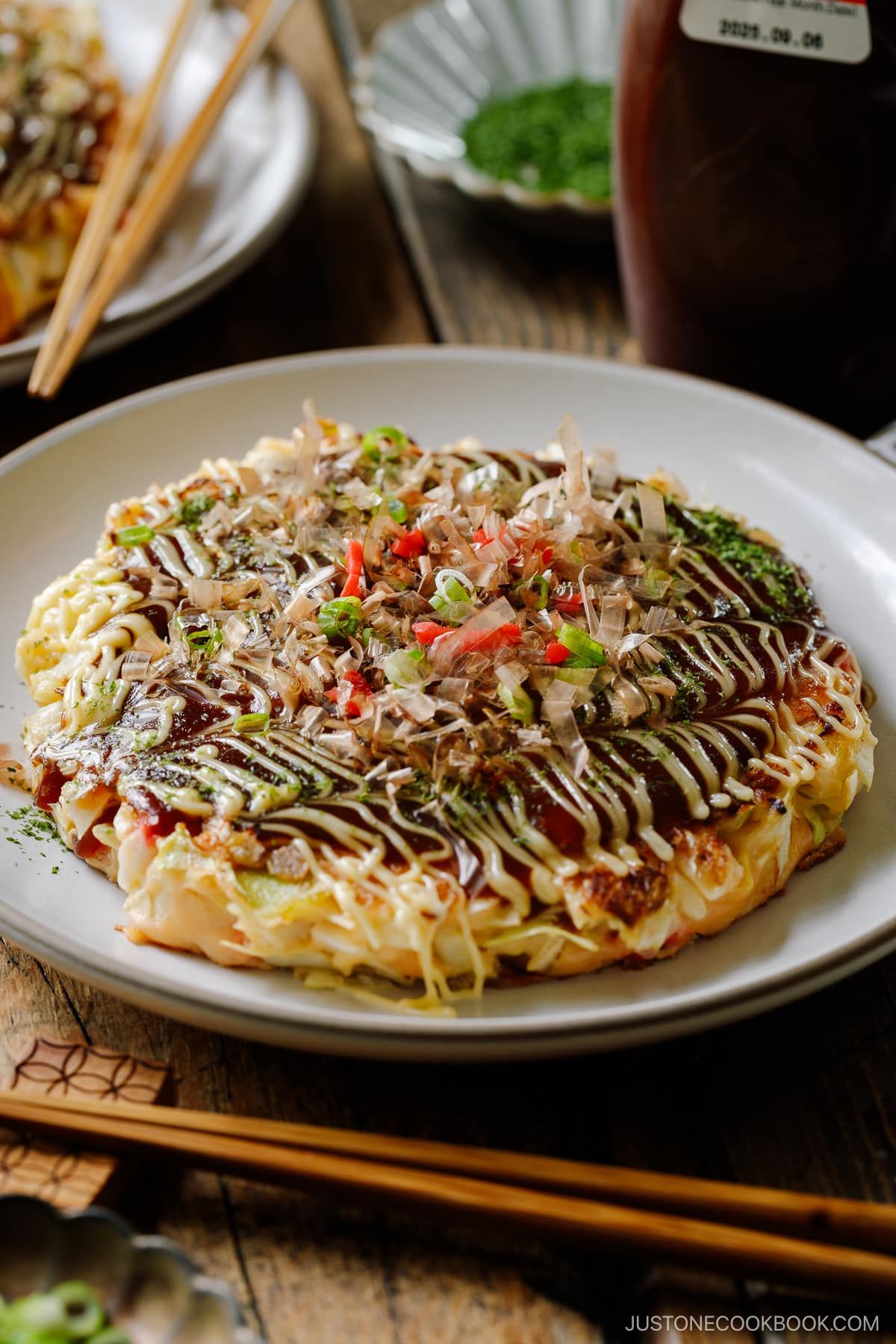
Once fully cooked, transfer the pancake to a plate. Generously drizzle okonomiyaki sauce in a zigzag pattern, followed by Japanese mayonnaise. Sprinkle aonori, katsuobushi, and extra green onions. The bonito flakes will “dance” from the heat, creating an irresistible presentation.
Nutrition Facts
Servings 4
- Amount Per Serving
- Calories 550kcal
- % Daily Value *
- Total Fat 28g44%
- Sodium 1500mg63%
- Total Carbohydrate 55g19%
- Dietary Fiber 6g24%
- Sugars 12g
- Protein 22g44%
* Percent Daily Values are based on a 2,000 calorie diet. Your daily value may be higher or lower depending on your calorie needs.
Note
Okonomiyaki Tips and Serving Tricks
Okonomiyaki, often called the “Japanese savory pancake,” is a comforting, customizable dish enjoyed across Japan, especially in Osaka and Hiroshima where it is most famous. The name itself means “grilled as you like it,” which reflects how versatile and adaptable this dish can be.
While it may seem simple—just batter, cabbage, and toppings—getting the perfect okonomiyaki requires some skill, balance, and smart serving techniques.
Here are some detailed tips and serving tricks to help you make restaurant-quality okonomiyaki at home and serve it beautifully to impress your family or guests.
1. Choose the Right Batter
The batter is the base of your okonomiyaki. Traditional batter includes flour, dashi (Japanese soup stock), egg, and grated yam (nagaimo or yamaimo). If you don’t have yam, you can substitute with a little cornstarch and extra egg for binding, but yam gives it that fluffy, moist texture. Make sure the batter isn’t too runny or too thick—aim for a consistency similar to pancake batter with a slightly lighter feel.
2. Cabbage Preparation
Cabbage is the soul of okonomiyaki. Use fresh, crisp cabbage and shred it finely but not too thin—around ½ cm pieces are ideal. If chopped too finely, the cabbage will wilt quickly and lose crunch; too chunky, and the pancake won’t hold together. Toss the cabbage gently into the batter rather than mixing too much, which keeps the pancake airy.
3. Add-ins for Flavor and Texture
Okonomiyaki is highly customizable. Popular add-ins include pork belly slices, shrimp, squid, cheese, or even mochi for a chewy bite. A traditional Osaka-style okonomiyaki often has thin pork belly slices laid on top while cooking so they crisp up nicely. For vegetarian versions, mushrooms, corn, or kimchi work beautifully. Don’t overload the batter—too many ingredients will weigh it down and prevent even cooking.
4. Cooking Tips
- Low to Medium Heat: Cook your okonomiyaki slowly on medium heat so the inside cooks thoroughly without burning the outside.
- Use a Lid: Cover the pan while cooking the first side to trap steam and cook the cabbage evenly.
- Flip with Confidence: After 4–5 minutes, flip the pancake in one swift motion with a wide spatula. Press gently to shape, but don’t flatten too much or it will become dense.
- Double Flip: Some chefs recommend flipping twice for an even crust and texture.
5. Signature Toppings
The toppings are what transform okonomiyaki into a piece of edible art. After cooking, spread a generous layer of okonomiyaki sauce (similar to Worcestershire but thicker and sweeter). Then drizzle Japanese mayonnaise in thin zigzag lines. Top with:
- Aonori (seaweed flakes) for umami.
- Katsuobushi (bonito flakes) that “dance” from the heat, creating a visual delight.
- Pickled ginger (beni shoga) for tang and freshness.
These toppings not only enhance flavor but also give an authentic Japanese street-food experience.
6. Serving Tricks
- Hot Plate Presentation: In Japan, okonomiyaki is often served directly on a teppan (hot plate) to keep it warm. At home, you can use a cast-iron skillet or electric griddle to recreate the experience.
- Cut into Squares or Wedges: Instead of cutting like a pizza, try slicing into small squares or rectangles with a spatula, making it easier for sharing. This also mirrors the way okonomiyaki is eaten in casual restaurants.
- Serve with Mini Spatulas (Kote): Small spatulas are used in Japan to transfer bite-sized pieces from the hot plate to the mouth. If you don’t have them, small serving forks or cocktail spatulas work well.
- Pair with Side Dishes: A simple miso soup, chilled edamame, or pickled cucumbers balance the richness of the pancake.
- Drinks Pairing: Okonomiyaki pairs wonderfully with chilled beer, sake, or even green tea for a lighter touch.
7. Make it Fun and Interactive
One of the best parts of okonomiyaki is the DIY element. You can prepare a variety of toppings and let each guest customize their pancake. This works well for family dinners or casual gatherings. Lay out bowls of cabbage, meats, seafood, and toppings, and let everyone create their own “as you like it” version.
Homemade Okonomiyaki Sauce (Optional)
If you don’t have store-bought okonomiyaki sauce, you can make a quick version by mixing:
- 3 tablespoons Worcestershire sauce
- 1 tablespoon ketchup
- 1 teaspoon soy sauce
- 1 teaspoon sugar
Adjust sweetness and saltiness to taste.
Tips and Variations
- Consistency of Batter: Avoid overmixing. A slightly lumpy batter helps keep the pancake fluffy.
- Regional Style: In Hiroshima, noodles (yakisoba or udon) are layered into the pancake, making it heartier.
- Protein Options: Try seafood such as shrimp and squid for a lighter, ocean-inspired version.
- Vegetarian Twist: Skip the meat and load up on shiitake mushrooms, carrots, or even corn.
- Topping Fun: Cheese lovers can add a slice of melty cheese inside or on top.
Serving Suggestions
Okonomiyaki is often enjoyed hot off the griddle, sometimes cooked tableside at specialty restaurants in Japan. At home, pair it with miso soup or a light cucumber salad for balance. It can also be cut into wedges and served as an appetizer at gatherings. One pancake typically serves 1–2 people, depending on appetite.
Why You’ll Love This Dish
Okonomiyaki combines the comfort of a pancake with the savory satisfaction of a loaded omelet. The crispy edges, tender cabbage, and umami-packed toppings make it both hearty and deeply flavorful. Its customizability means you’ll never get bored—one day you can make it with pork, the next with shrimp or vegetarian ingredients.
In Japan, okonomiyaki is more than just food—it’s an experience. Families often gather around a hot plate, flipping their pancakes together and customizing toppings. Bringing that tradition into your kitchen makes for not only a delicious meal but also a fun cooking activity.
Storage and Reheating
While okonomiyaki is best eaten fresh, leftovers can be refrigerated for up to 2 days. Wrap tightly in foil or store in an airtight container. To reheat, warm in a skillet over medium-low heat to preserve crispness, or microwave for convenience.
Conclusion
Making okonomiyaki at home is a wonderful way to explore Japanese cuisine without requiring exotic techniques or expensive equipment. With a simple batter base and the freedom to add whatever fillings you prefer, you’ll soon understand why this dish is called “as you like it.”
Okonomiyaki is more than just a pancake—it’s a dish of community, creativity, and comfort. With the right batter consistency, well-prepped cabbage, and thoughtful toppings, you can achieve a fluffy, flavorful pancake. Presenting it on a hot skillet, cutting into shareable squares, and serving with traditional toppings elevates the experience.
Whether you enjoy it Osaka-style with pork belly, Hiroshima-style with yakisoba noodles, or with your own twist, the key is balance and enjoyment. Remember: okonomiyaki is meant to be fun, delicious, and shared.
Topped with savory sauce, creamy mayo, and dancing bonito flakes, each bite bursts with texture and flavor. Whether enjoyed for lunch, dinner, or a weekend cooking project with family, okonomiyaki is sure to become a favorite in your kitchen.
Pin this recipe to share with your friends and followers.

Frequently Asked Questions
What is Okonomiyaki?
Okonomiyaki is a popular Japanese savory pancake made with a batter of flour, grated yam, eggs, shredded cabbage, and dashi or water. The name translates to “grill as you like it,” reflecting its versatility—various toppings and fillings such as pork belly, seafood, cheese, or vegetables can be added. It is pan-fried and typically served with a rich, tangy okonomiyaki sauce, Japanese mayonnaise, bonito flakes, and aonori (seaweed flakes).
Are there different regional styles of Okonomiyaki?
Yes. The two most famous styles are Osaka style and Hiroshima style. In Osaka, all ingredients are mixed together into the batter before cooking. In Hiroshima, layers are carefully built, usually starting with a thin crepe, followed by cabbage, bean sprouts, meat, noodles (yakisoba or udon), and topped with a fried egg. While Osaka style is fluffier, Hiroshima style tends to be more structured and filling.
Can I make Okonomiyaki at home without special ingredients?
Absolutely. While traditional recipes use Japanese flour, dashi, and yamaimo (Japanese yam), you can create tasty versions using all-purpose flour, cabbage, eggs, and water or stock. Okonomiyaki sauce can be substituted with a mix of Worcestershire sauce, ketchup, and soy sauce. If you can’t find bonito flakes or aonori, simple garnishes like green onions or sesame seeds also work. The dish is very forgiving, allowing you to adapt to what you have in your kitchen.
Is Okonomiyaki healthy?
It can be! Okonomiyaki is packed with cabbage, which adds fiber and nutrients, while protein from eggs, pork, or seafood makes it satisfying. However, toppings like mayonnaise and sauce add calories and sodium. For a lighter version, use lean protein, extra vegetables, and less sauce. Overall, it’s a balanced comfort food that can be both indulgent and nutritious depending on how it’s prepared.