


Forget everything you know about the traditional, gravy-slathered pot roast. This isn’t your grandmother’s Sunday dinner—this is a culinary passport to the vibrant, umami-rich flavors of Asia, transforming a humble, slow-cooked beef cut into a breathtaking, unforgettable meal.
Imagine tender chuck roast, braised for hours until it’s spoon-tender, not in beef broth and wine, but in a savory-sweet elixir of soy sauce, ginger, star anise, and citrus. The result is deeply complex, slightly sticky, and gloriously aromatic. Bookmark this savory journey now for your next culinary adventure!
Instead of thick, brown gravy, the beef creates its own velvety, dark, concentrated sauce, perfect for spooning over steamed rice or soaking up with soft bao buns. This fusion dish is the ultimate mashup of comforting, slow-cooked texture and bright, layered Eastern seasoning.
It’s the perfect way to revitalize your dinner routine and introduce your family to a profound new flavor profile, proving that a classic American cut can truly speak a global language.
Asian Pot Roast: An Incredible Ultimate Recipe for 5-Star Meals
Description
A rich and savory twist on a classic comfort food, Asian Pot Roast trades the typical heavy gravy for a deeply aromatic, umami-rich braising liquid.
A tough cut of beef, like chuck, is slow-cooked until meltingly tender in a complex sauce featuring soy sauce, fresh ginger, garlic, and often a touch of sweetness from honey or brown sugar.
The result is fall-apart meat that is intensely flavorful, perfect for shredding and serving over steamed rice to soak up the luxurious, East-meets-West pan juices. It's a culinary hug with an exotic depth.
Ingredients
Instructions
-
Begin by blotting a 3–4 pound beef chuck roast until its surface is perfectly dry. In a small bowl, mix the distinctive "Dragon's Breath" rub: two tablespoons of kosher salt, one tablespoon of freshly ground black pepper, one tablespoon of newly grated ginger, two teaspoons of garlic powder, and one teaspoon of Chinese Five-Spice powder. Forcefully press this potent combination deep into the entire surface area of the beef until the roast is fully coated and prepared for heat.
-
Heat two tablespoons of neutral oil (like canola or peanut) in a heavy Dutch oven on high heat until a wisp of smoke appears. Gently lower the seasoned chuck roast into the heated pot. Allow the meat to brown intensely for roughly 3 to 4 minutes on each face, generating a rich, dark outer layer. This exterior caramelization locks in flavor; once the crust is established, lift out the roast and set it aside.

-
Lower the temperature to a medium setting. Introduce a sliced large onion, three chopped carrots, and a handful of sliced mushrooms to the same Dutch oven, using their moisture to scrape the savory residue from the bottom. Sauté these vegetables until they become tender and fragrant, about five minutes. Introduce two cloves of minced garlic and an additional tablespoon of fresh grated ginger, stirring for sixty seconds.
-
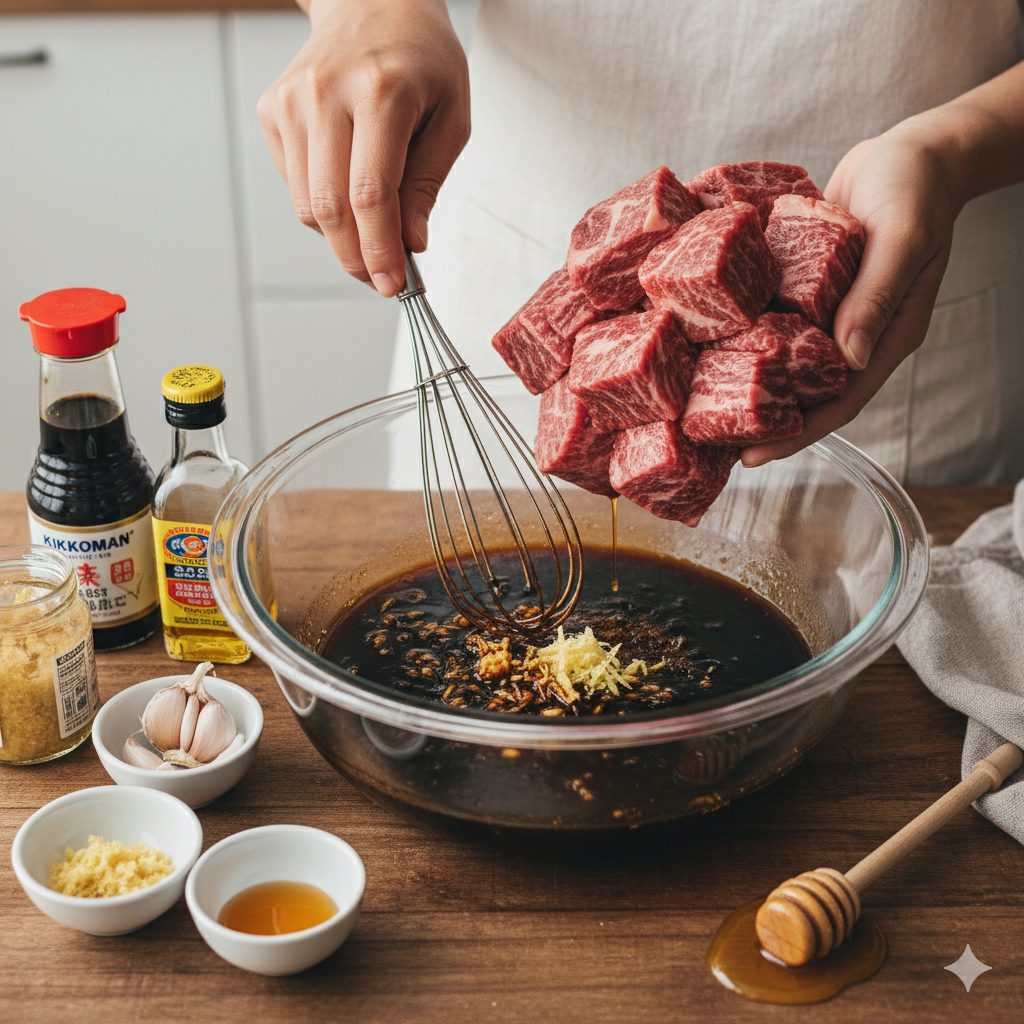
Form the rich liquid base directly in the cooking pot. Whisk together one cup of low-sodium beef broth, half a cup of soy sauce (or tamari), a quarter cup of dark brown sugar, two tablespoons of rice vinegar, and one tablespoon of toasted sesame oil. Bring this mixture to a slow, gentle bubble, mixing constantly until the sugar granules have fully dissolved, yielding a complex, deep, savory and gently sweet solution.

-
Place the seared chuck roast back into the Dutch oven, settling it among the vegetables. The liquid should cover the lower half of the meat. Seal the Dutch oven with its heavy lid and transfer it to an oven that has been preheated to a gentle 300°F (150°C). Allow the roast to slowly transform for 3.5 to 4 hours, or until it can be easily pierced with minimal effort.
-
When the meat is completely yielding, take the Dutch oven out of the oven. Carefully lift the chuck roast from the simmering liquid and move it onto a cutting surface. Cover the warm meat loosely with aluminum foil and permit it a recovery period of at least 15 minutes. This downtime permits the internal moisture to settle. Following the rest, employ two forks to gently pull the beef fibers apart into delightful, manageable pieces.
-
Remove any visible fatty layer from the surface of the braising liquid. For a thicker, concentrated coating, you may boil the leftover liquid on the stovetop until its volume is noticeably reduced. Toss the pulled beef back into this reduced sauce to ensure every strand is fully coated. Serve the "Dragon's Breath" Pot Roast over steamed rice, finishing it with a final scattering of toasted sesame seeds and finely sliced green onions for a bright, crunchy contrast.

Nutrition Facts
Servings 8
- Amount Per Serving
- Calories 420kcal
- % Daily Value *
- Total Fat 23g36%
- Sodium 860mg36%
- Total Carbohydrate 18g6%
- Dietary Fiber 2g8%
- Sugars 8g
- Protein 35g70%
* Percent Daily Values are based on a 2,000 calorie diet. Your daily value may be higher or lower depending on your calorie needs.
Note
Mastering the Asian-Inspired Pot Roast
The traditional pot roast, a comforting, slow-cooked marvel, gets a vibrant, aromatic makeover when infused with the dynamic flavors of East and Southeast Asia. Instead of the typical savory gravy, the meat is simmered in a rich, complex broth featuring soy sauce, ginger, star anise, and five-spice powder.
This method transforms a simple cut of beef into a fork-tender, deeply caramelized dish. This guide offers essential tips for achieving the best results, creative serving suggestions, exciting variations, and practical storage advice.
Essential Tips for Success
Selecting the Cut
Chuck roast is the classic choice, but beef short ribs or even a brisket flat also work exceptionally well.
The Browning Imperative
Do not skip the initial sear. Pat the beef very dry with paper towels, season aggressively, and brown it deeply on all sides in a hot pot before adding any liquid. This step develops the Maillard reaction, creating hundreds of flavor compounds that form the savory backbone of the final sauce.
Building the Flavor Base
The aromatic foundation is key. Sauté the tougher aromatics—such as fresh ginger slices, garlic cloves, and scallion whites—immediately after browning the meat.
The Signature Braising Liquid
Unlike a Western pot roast that uses beef broth and wine, the Asian version relies on a complex balance of sweet, salty, and umami. A typical blend includes soy sauce (for salt and color), Shaoxing rice wine or dry sherry (for depth), a touch of honey or brown sugar (to balance the saltiness and aid caramelization), and a generous amount of broth or water. The most critical component is the spice blend, often featuring star anise, cinnamon sticks, and five-spice powder.
Low and Slow is the Golden Rule
The magic of a pot roast lies in its patience. Once all ingredients are in, the liquid should only partially cover the meat—about halfway. Cover the pot tightly and cook at a low temperature for 3 to 4 hours. The meat is done when it shreds easily with a fork, registering an internal temperature around.
Creative Serving Tricks
The intense, flavorful nature of Asian Pot Roast makes it incredibly versatile. Move beyond a simple side of mashed potatoes!
Traditional Accompaniment
Serve the shredded meat over steamed jasmine rice or a bowl of toothsome rice noodles. Drizzle the rich, concentrated braising liquid—which acts as a sauce—over the top. Garnish with vibrant additions like toasted sesame seeds, thinly sliced scallions, and a sprinkle of chili flakes for texture and contrast.
The Sandwich Revolution
Use the shredded, saucy beef as the filling for an Asian-style sandwich.
- Banh Mi Style: Tuck the meat into a toasted baguette with pickled carrots and daikon, fresh cilantro, and a smear of Sriracha mayonnaise.
- Steamed Bun (Bao) Filling: Serve the meat inside soft, fluffy steamed buns with a dollop of hoisin sauce and crushed peanuts.
Fusion Comfort Bowls
This pot roast is exceptional when incorporated into other dishes:
- Pot Roast Ramen: Use the strained braising liquid as the base for a rich ramen broth, thinning it slightly with chicken stock. Top with the shredded beef, a soft-boiled egg, and nori.
- Deconstructed Egg Rolls: Serve the meat atop a bed of crisp shredded cabbage and carrots, dressing the salad with a light vinaigrette and crunchy fried wonton strips.
Flavor and Ingredient Variations
Once you master the basic technique, you can easily shift the flavor profile:
Korean Bulgogi Style
Replace the star anise and five-spice with gochujang (Korean chili paste), pear juice or grated apple (for tenderizing and sweetness), sesame oil, and a heavier hand of garlic and ginger. Braise until tender, resulting in a spicy-sweet, caramelized exterior.
Vietnamese Caramel (Thịt Kho)
Focus on a savory-sweet, deep-amber color by creating a true caramel base with sugar before adding the liquid. Use fish sauce instead of a significant amount of soy sauce for a saltier, more pungent depth, and add a single whole coconut water for a hint of tropical sweetness.
Filipino Adobo Influence
Dramatically increase the amount of vinegar (cane or cider) and black peppercorns. The resulting sauce will be tangy, salty, and peppery, which contrasts beautifully with the richness of the beef. Adding a few bay leaves is essential for that signature adobo aroma.
Storage and Reheating
Storing the Leftovers
Allow the pot roast to cool completely, then store both the shredded meat and the remaining braising liquid together in an airtight container in the refrigerator. The meat will absorb more flavor as it rests in the sauce.
Freezing for Later
For longer storage, the pot roast freezes exceptionally well. Separate the meat and liquid into smaller, meal-sized portions and freeze in freezer-safe containers for up to 3 months. Thaw overnight in the refrigerator before reheating.
Best Reheating Method
Reheat gently on the stovetop over low heat or in a microwave, covered, until warmed through. The gentle heat allows the gelatinized sauce to liquefy and re-moisten the meat without drying it out.
Conclusion
The Asian Pot Roast is a testament to the versatility of slow cooking, transforming a humble cut of beef into a spectacular fusion dish. By focusing on deep browning, a well-balanced aromatic braising liquid, and patient, low-temperature cooking, you create a dish that is deeply comforting yet excitingly complex. Whether served simply over rice or reinvented in a banh mi, this technique guarantees a tender, flavor-packed meal with endless possibilities for creative adaptation.
Pin this recipe to share with your friends and followers.