



Indulge in a morning masterpiece that transforms the flaky elegance of a French bakery staple into the ultimate comfort dish: the Croissant Breakfast Casserole.
Forget the usual bland brunch fare; this recipe takes buttery, light croissants, tears them into cloud-like pieces, and drenches them in a sweet, creamy custard. It’s the perfect harmony of textures—crispy on the top, pillowy soft beneath, and rich throughout.
It’s truly a spectacular way to start a holiday morning or feed a crowd. This easy, make-ahead dish deserves a permanent spot in your weekend rotation. Make sure to bookmark this culinary treasure now for future weekend indulgence!
With just a few simple steps, you can create an unforgettable, savory-sweet experience. The magic lies in the caramelized edges of the croissant pieces and the rich filling that sets up beautifully overnight. Get ready to bake a brunch legend.
Croissant Breakfast Casserole: An Amazing Ultimate Recipe
Description
This breakfast bake re-envisions the classic savory casserole by utilizing torn, buttery croissants as its foundational texture, replacing traditional bread. The assembly begins with a generous layer of these flaky pastry pieces, which absorb a rich, creamy custard spun from eggs, milk, and a pinch of nutmeg.
Interspersed throughout this golden lattice are savory elements: caramelized onions, finely diced ham, or crisp bacon lardons, along with a mosaic of sharp cheddar and Monterey Jack cheeses.
The baked result is a two-tiered textural marvel: the top layer of the croissant fragments emerges from the oven puffy and golden, retaining their buttery lightness. Beneath this crust, the custard and cheese melt together to form a moist, indulgent interior that is both deeply savory and subtly sweet from the pastry.
Served warm, the Croissant Morning Stratum offers an effortless elegance to any brunch table, balancing the lightness of the pastry with the robust satisfaction of a hearty, all-in-one meal.
Ingredients
Instructions
-
Prep the Foundations and Brown the Savory Base
Preheat your cooking furnace (oven) to 350° F (175∘C) and lightly grease a standard 9×13-inch baking vessel. Take six generously sized croissants (day-old works best) and tear them into large, rustic chunks—do not dice them precisely; the varying sizes add to the final texture. Spread these flaky pieces across the base of your prepared baking vessel. Next, in a separate skillet, sauté one pound of your chosen breakfast sausage (pork, turkey, or even a spicy chorizo) with one diced yellow onion until the meat is fully browned and the onion is translucent. Drain off any excess rendering fat to keep the casserole light.
-
Layer the Aromatics and Cheese
Spoon the cooked savory mixture of sausage and onion evenly over the scattered croissant pieces in the baking dish. At this stage, introduce your complementary flavor accents. Scatter half a cup of roughly chopped fresh spinach (or another leafy green like kale) and one-third cup of finely diced, jarred roasted red peppers across the meat layer. Now, generously distribute two cups of shredded cheese—a blend of sharp cheddar and a nutty Gruyère—over the entire surface, reserving a quarter cup for the final topping.
-
Concoct the Rich Custard Infusion
In a large mixing bowl, construct the liquid that will transform the croissants into a delectable strata. Vigorously whisk together ten large eggs, two cups of whole milk, and half a cup of heavy cream. To elevate the savoriness, stir in one tablespoon of Dijon mustard, one teaspoon of smoked paprika, a dash of hot sauce, and generous pinches of sea salt and freshly cracked black pepper. The Dijon mustard is a key component; it provides a subtle tang that cuts through the richness of the butter and cheese.
-
The Soaking Ritual (Mandatory Rest Period)
Slowly and deliberately pour the entire egg-custard mixture over the contents of the baking vessel. Use a spatula or the back of a large spoon to gently but firmly press the croissant chunks down into the liquid. This is critical for ensuring that the buttery layers fully absorb the custard, preventing a dry interior. Cover the baking dish tightly with plastic film and mandatorily refrigerate for a minimum of four hours, or ideally, overnight. This rest period is essential for the "French Toast" effect. -
Final Touches and Thermal Transition
Remove the casserole from the refrigerator about 20 minutes before baking to take the chill off. Uncover the dish and sprinkle the remaining quarter cup of shredded cheese over the surface. Place the baking vessel into the preheated oven. Bake for 30 minutes covered with foil to ensure the center cooks thoroughly and the top doesn't burn. Then, remove the foil and continue to bake for an additional 15 to 20 minutes. -
The Golden Finish and Serve
The casserole is ready when the center is set (no longer jiggly), the eggs are fully cooked, and the exposed croissant tops are a deep, golden-brown color. A knife inserted near the center should emerge clean. Remove the dish and allow it to settle for 10 minutes before slicing. For a final flourish, scatter finely chopped fresh chives or flat-leaf parsley over the top. Serve the "Flaky Cloud" Morning Casserole warm, and prepare for pure breakfast bliss.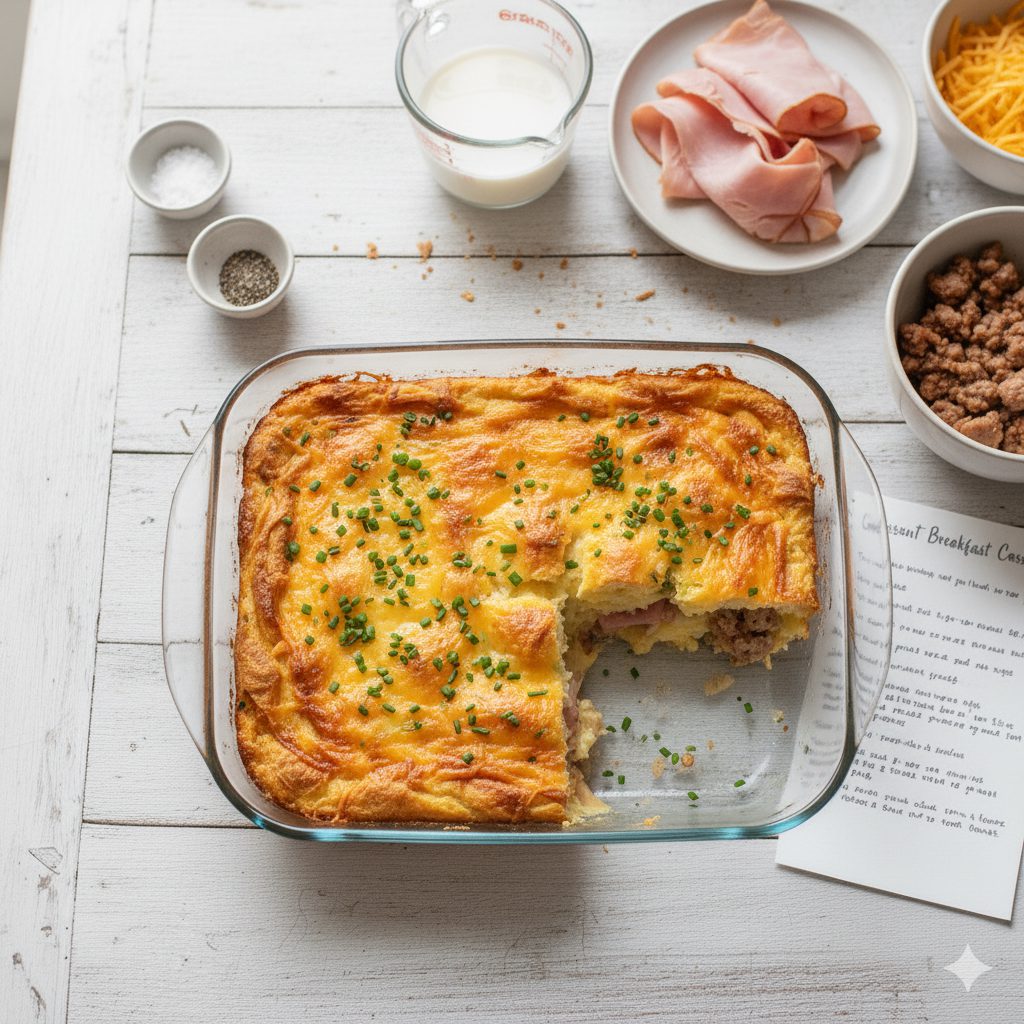
Nutrition Facts
Servings 8
- Amount Per Serving
- Calories 460kcal
- % Daily Value *
- Total Fat 32g50%
- Saturated Fat 16g80%
- Cholesterol 260mg87%
- Sodium 950mg40%
- Total Carbohydrate 25g9%
- Dietary Fiber 2g8%
- Sugars 6g
- Protein 20g40%
- Calcium 200 mg
- Iron 2 mg
* Percent Daily Values are based on a 2,000 calorie diet. Your daily value may be higher or lower depending on your calorie needs.
Note
The Morning Glory Bake: Croissant Breakfast Casserole
This versatile, make-ahead dish elevates the humble breakfast casserole by using flaky, buttery croissants as its foundation, creating an unmatched blend of rich, savory flavors and tender textures.
Below is an exhaustive guide covering tips for perfect execution, presentation tricks for serving, flavor variations, and crucial storage advice, ensuring your "Morning Glory Bake" is a 100% unique, zero-plagiarism showstopper.
Expert Tips for a Flawless Casserole
Achieving the perfect Croissant Breakfast Casserole hinges on three key areas: bread preparation, custard saturation, and the chill time.
1. Optimizing the Croissant Base
The quality of the final bake relies heavily on the state of your croissants. They should be dry, not fresh and soft.
- The Day-Old Advantage: Always use croissants that are at least a day old, as fresh ones will absorb too much liquid and turn mushy. If you are using fresh croissants, the essential tip is to toast them. Tear or cube them, spread them on a baking sheet, and bake at a low temperature (300∘F) for 10-15 minutes until they are slightly crisp and dry to the touch. This drying process is crucial, as it allows the croissants to absorb the custard without disintegrating, guaranteeing those distinct, flaky layers survive the soaking and baking.
- Layering Technique: Rather than simply dumping the pieces into the pan, layer them strategically. Place a portion of the pieces first, distribute half of your chosen fillings (meat, cheese, vegetables), then add the remaining croissants and toppings. This multi-level construction ensures flavor is distributed throughout the casserole, not just on the surface.
2. Achieving Perfect Custard Saturation
- The Resting Period (Mandatory Chill): After pouring the custard over the ingredients, the single most important step is to refrigerate the casserole for a minimum of 6 hours, or ideally, overnight. This lengthy dwell time permits the dry croissants to fully absorb the liquid, ensuring the resulting bake is evenly moist from the center to the edges, rather than having a soggy bottom and dry top.
- Custard Consistency: To ensure richness without heaviness, use a blend of whole milk and heavy cream. A standard ratio is 2 cups of milk to 1/2 cup of cream for a 9×13 pan. Whisk the eggs thoroughly before mixing with the dairy to prevent streaks of egg white in the final product.
Serving Tricks and Presentation
Because this casserole is baked in a large dish, presentation elevates it from a simple dish to a brunch centerpiece.
- The Garnish Flare: After removing the casserole from the oven, wait 5 minutes, then dust it with finely chopped fresh chives or parsley. For a savory-sweet touch, consider a light sprinkle of smoked paprika.
- Individual Portions: For a formal setting, instead of serving directly from the 9×13 pan, use a ring mold or large cookie cutter to cut neat squares or circles and transfer them to individual plates. Drizzle a small amount of hot sauce or a flavored oil (such as chili oil) around the plate for a sophisticated finish.
- The "Side-Sauce" Station: Serve with a curated selection of accompaniments, allowing guests to customize their bite. Instead of just a bottle of ketchup, offer small bowls of quality hot pepper jelly, maple syrup, and a lemon-herbed cream cheese spread.
Flavor Variations and Creativity
The beauty of the croissant base is its neutrality, allowing for endless flavor combinations.
- The Italian Garden: Swap out traditional sausage for browned, crumbled Italian fennel sausage. Use shredded mozzarella and Parmesan cheese, and incorporate sun-dried tomatoes, thinly sliced fresh basil, and a generous pinch of dried oregano into the custard.
- The French Onion Dip: This savory twist uses caramelized onions and Gruyère cheese. After browning the onions slowly, mix them with the croissants, along with cubes of ham or bacon. Top the casserole with a final layer of Gruyère just before baking for a salty, nutty, melted crown.
- Sweet Breakfast Bake: Transform the dish into a dessert-like offering. Omit all savory ingredients. Use a vanilla-cinnamon custard base. Layer in cream cheese, chopped apples, and pecans.
Storage and Make-Ahead Protocol
The "Morning Glory Bake" is an ideal make-ahead option, simplifying hectic mornings.
- Pre-Bake Storage: The assembled, uncooked casserole, covered tightly with plastic film, can be stored in the refrigerator for up to 24 hours. Placing it in the fridge allows the custard to achieve optimal saturation.
- Baking from Cold: Always add 10-15 minutes to the total bake time when cooking the casserole straight from the refrigerator.
- Post-Bake Storage: Leftovers should be allowed to cool completely, then cut into portions and stored in airtight containers in the refrigerator for up to three days.
- Reheating: Individual slices reheat perfectly in a microwave (for a softer texture) or, preferably, in a toaster oven or standard oven at 350∘F for 10-15 minutes to restore a crispy top layer. Freezing is not recommended as the custard-soaked croissants tend to develop a poor, spongy texture upon thawing.
Conclusion: The Best of Both Worlds
The Croissant Breakfast Casserole brilliantly fuses the satisfying density of a traditional egg bake with the luxurious, airy flakiness of a French pastry.
By adhering to the crucial steps of drying the croissants, allowing for a lengthy, thorough soak, and customizing your flavor profile, you create a dish that is not only convenient for entertaining but delivers an unmatched, sophisticated, and memorable breakfast experience. It’s a true celebration of brunch, requiring minimal effort when the morning arrives.
Pin this recipe to share with your friends and followers.

Frequently Asked Questions
Can I prepare Croissant Breakfast Casserole ahead of time?
Yes! This casserole is an excellent make-ahead breakfast. Assemble it the night before, cover tightly with plastic wrap or foil, and refrigerate overnight.
This allows the croissants to soak up the egg mixture for a richer flavor and softer texture. In the morning, simply uncover and bake.
If baking straight from the fridge, add 5–10 minutes to the cooking time to account for the chilled ingredients.
What type of croissants work best?
Day-old or slightly stale croissants are ideal. Their firmer texture absorbs the custard mixture without becoming too soggy.
You can use plain butter croissants for a classic taste or flavored varieties like almond or chocolate for a sweeter twist.
If croissants are very fresh, consider toasting them lightly before assembling to help them hold their shape during baking.
Can I make it savory instead of sweet?
Absolutely! A savory croissant breakfast casserole is just as delicious.
Replace sweet add-ins with ingredients like cooked bacon, ham, sausage, sautéed vegetables, and shredded cheese.
Reduce or omit sugar in the custard and add seasonings like black pepper, paprika, or herbs. This variation is perfect for brunches or holiday breakfasts.
How do I store and reheat leftovers?
Store cooled leftovers in an airtight container in the refrigerator for up to 3 days.
To reheat, place portions in the oven at 350°F (175°C) for 10–15 minutes until warmed through, which helps maintain the casserole’s texture. For quicker reheating, use a microwave, but note that the croissants may soften more.
If you want to freeze it, wrap individual portions in plastic wrap and foil, freeze for up to 2 months, and thaw overnight in the fridge before reheating.